
How Modern Tools Revived the 3dfx Voodoo Graphics Chip
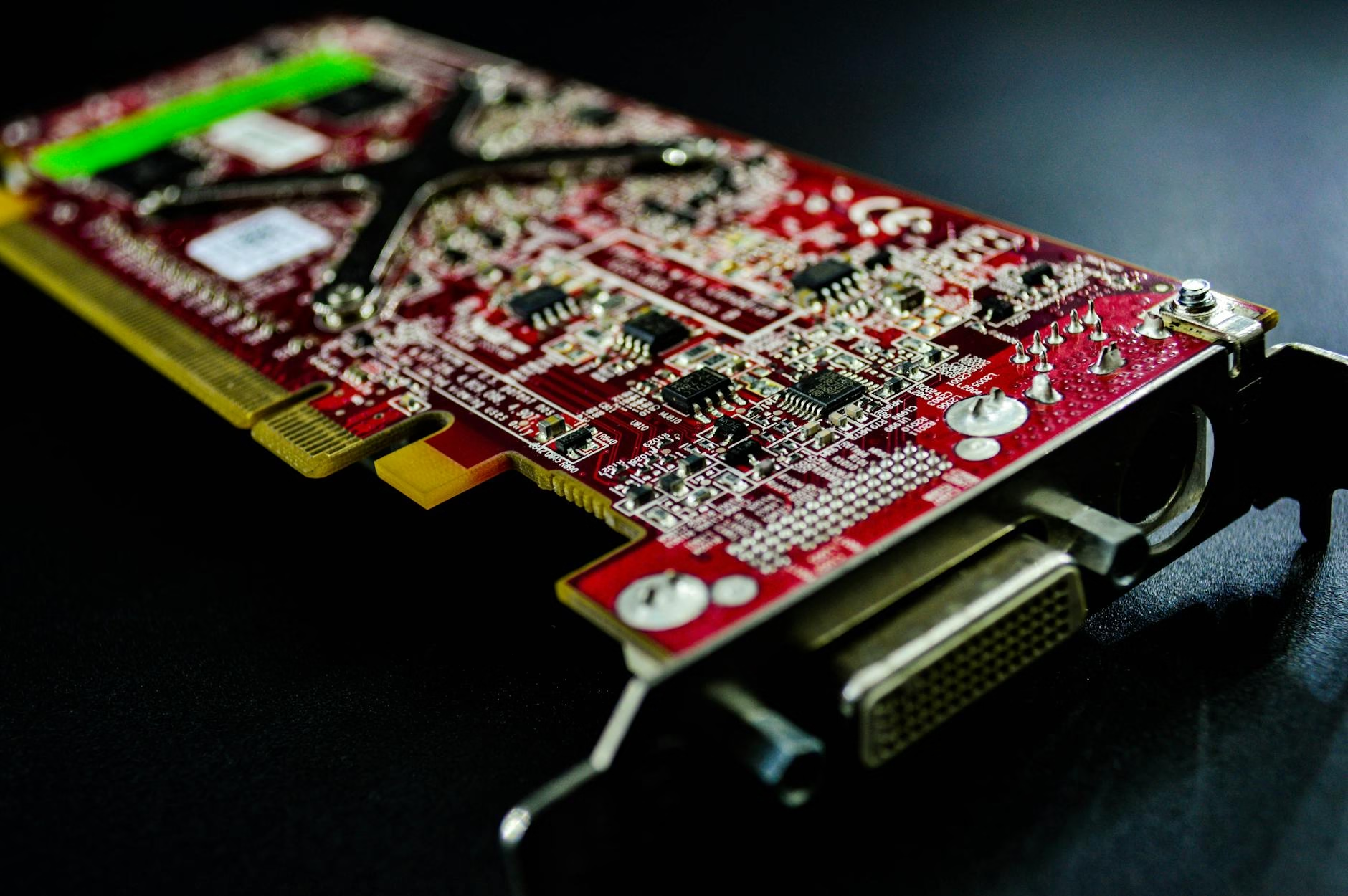
The revival of the iconic 3dfx Voodoo graphics chip showcases how modern RTL tools can transform complex hardware projects. A recent project demonstrated that recreating this classic chip is not only possible but also manageable for individual developers. With tools like SpinalHDL, designers can now describe, simulate, and debug intricate designs effectively.

The original Voodoo was a fixed-function graphics accelerator, meaning its operations were hardwired into silicon. This design choice made it complex despite its age. Unlike modern GPUs that offer flexibility through programmable shaders, the Voodoo’s rendering behaviors are fixed. This complexity presents unique challenges when attempting to replicate its functionality.
Key takeaways
- Modern RTL tools simplify complex hardware designs.
- The fixed-function nature of the Voodoo adds unique challenges.
- Effective debugging requires understanding register behaviors.
- Tools like SpinalHDL enhance architectural clarity in designs.
A significant challenge during this project was managing register writes effectively. The Voodoo’s deeply pipelined architecture means that writing to registers can affect rendering outcomes if not timed correctly. For example, if a new triangle’s settings are applied too early, it may corrupt pixels from previously rendered triangles. Understanding these timing issues is crucial for accurate replication.

The project categorized registers into four types: FIFO, FIFO + Stall, Direct, and Float. Each type has specific behaviors that dictate how and when they can be written to. This categorization simplifies managing state changes within the pipeline and helps prevent errors during rendering.
Another critical aspect of this project was debugging. The developer faced issues with translucent overlays where some pixels would
disappear unexpectedly. Initially suspected as a framebuffer issue, deeper investigation revealed multiple small inaccuracies stacking up to create visible problems. Using a netlist-aware tool like conetrace allowed for more effective tracking of pixel behavior through various stages of processing.
What Modern RTL Tools Changed
The introduction of modern RTL tools has significantly altered how engineers approach complex designs like the Voodoo. Instead of spreading architectural intent across various documents and code sections, SpinalHDL allows developers to encode this information directly within their source code. This change reduces confusion and enhances clarity throughout the development process.
Additionally, conetrace enables engineers to inspect execution more intuitively than traditional waveform viewers allow. By following pixel behavior through different stages of processing, developers can pinpoint issues more accurately without getting lost in a sea of signals.
This project illustrates that while recreating an old chip like the 3dfx Voodoo remains challenging due to its fixed-function nature, modern tools make it feasible for individuals or small teams to tackle such ambitious projects successfully. As a result, engineers can focus on refining their designs rather than getting bogged down by complexity.
FAQ
- What is the significance of the 3dfx Voodoo? The Voodoo was one of the first dedicated graphics accelerators that revolutionized gaming graphics in the late ’90s.
- How do modern RTL tools help in hardware design? They simplify complex designs by allowing direct encoding of architectural intent and improving debugging capabilities.
- Can individual developers recreate old chips? Yes, with modern tools like SpinalHDL and conetrace, individuals can manage complex projects effectively.
For the original report, see the source article.