

Agentic AI 7 Game-Changing Ways Autonomous Systems 2025
Introduction
The next frontier of artificial intelligence is here: Agentic AI, a paradigm where AI systems operate autonomously, making decisions and executing tasks with minimal human intervention. By 2025, these systems are projected to drive $4.4 trillion in global productivity gains, according to McKinsey. From streamlining supply chains to transforming customer service, Agentic AI promises unprecedented efficiency—but not without risks. This article dives into how autonomous systems work, their real-world applications, ethical challenges, and what businesses must prepare for in the coming years.
What is Agentic AI?
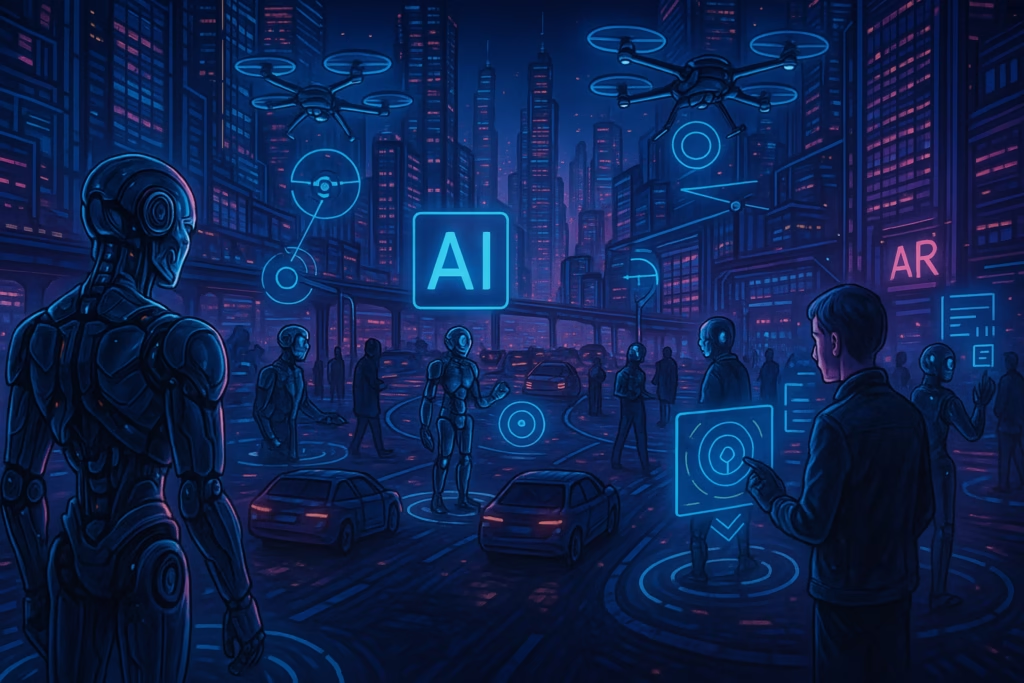
Agentic AI refers to systems designed to act independently within predefined boundaries. Unlike traditional AI, which relies on human prompts, these agents proactively identify tasks, analyze data, and execute workflows. For example, an Agentic AI in HR could autonomously onboard new employees by verifying documents, scheduling training, and assigning mentors—all without manual oversight.

Key Features:
- Self-Directed Decision-Making: Leverages reinforcement learning to prioritize tasks.
- Contextual Awareness: Uses multimodal data (text, images, sensors) to adapt to dynamic environments.
- Collaborative Networks: Multiple agents work in tandem (e.g., coordinating logistics across warehouses).
Why It Matters:
Agentic AI reduces operational latency and human error. A Deloitte study found autonomous systems cut process completion times by 40% in manufacturing.
Applications of Agentic AI
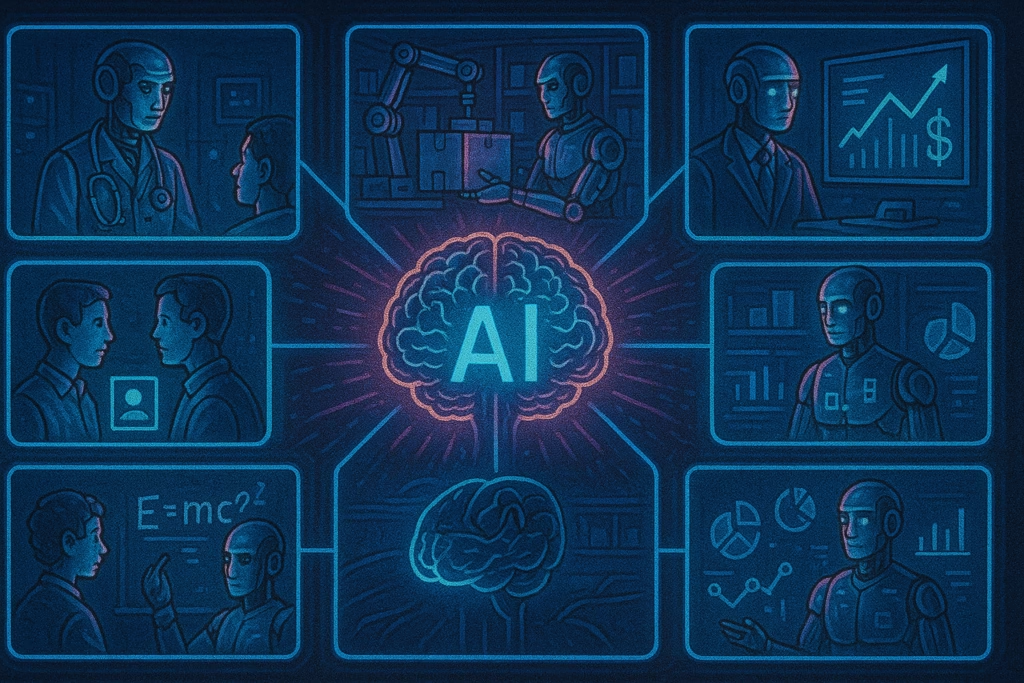
- Supply Chain Optimization
Autonomous agents predict demand fluctuations, reroute shipments during disruptions, and negotiate with suppliers in real time. Companies like DHL report 30% faster delivery times using AI-driven logistics. - Customer Support Automation
AI agents resolve routine queries (e.g., refunds, password resets) and escalate complex issues. Klarna’s AI assistant handles 2.3 million conversations monthly, equivalent to 700 full-time agents. - Healthcare Diagnostics
Systems like IBM’s Watson analyze medical images and patient histories to recommend treatments. In radiology, Agentic AI reduces diagnostic errors by 27% (Nature Medicine).
Challenges of Autonomous Systems
While promising, Agentic AI faces critical hurdles:
- Accuracy Concerns: Hallucinations (fabricated outputs) plague generative models. For instance, an AI agent might misroute shipments due to faulty sensor data.
- Human Oversight: Fully autonomous systems risk ethical breaches. A Goldman Sachs report warns that 12% of AI-driven financial decisions require human audits.
- Integration Costs: Deploying agentic workflows demands upskilling teams and overhauling legacy systems.
Ethical Considerations
The autonomy of Agentic AI raises pressing questions:
- Bias Amplification: If trained on biased data, agents may automate discriminatory practices (e.g., loan approvals).
- Accountability: Who’s liable when an AI agent causes harm? Current regulations like the EU AI Act lack clarity.
- Job Displacement: McKinsey estimates 14% of global workforces will need to reskill by 2025 due to AI automation.
Future Trends
- Human-AI Collaboration: Hybrid systems where humans supervise AI agents (e.g., doctors validating AI diagnoses).
- Edge AI: Autonomous agents embedded in IoT devices for real-time responses (e.g., self-repairing smart grids).
- Regulatory Frameworks: Governments are drafting laws to govern AI autonomy, such as the U.S. No AI FRAUD Act targeting malicious deepfakes.
Conclusion
Agentic AI is poised to redefine industries, but its success hinges on balancing innovation with responsibility. Businesses must invest in robust governance frameworks, prioritize transparency, and foster human-AI collaboration. As autonomous systems evolve, staying ahead requires not just adopting technology—but shaping its ethical trajectory.