

The Legal Challenges of NASA’s Artemis Moon Base Project
NASA’s Artemis II mission is set to launch soon, aiming to establish a human presence on the Moon. However, this ambitious project raises significant legal questions. Can NASA legally claim resources from the Moon? What international laws govern lunar activities?
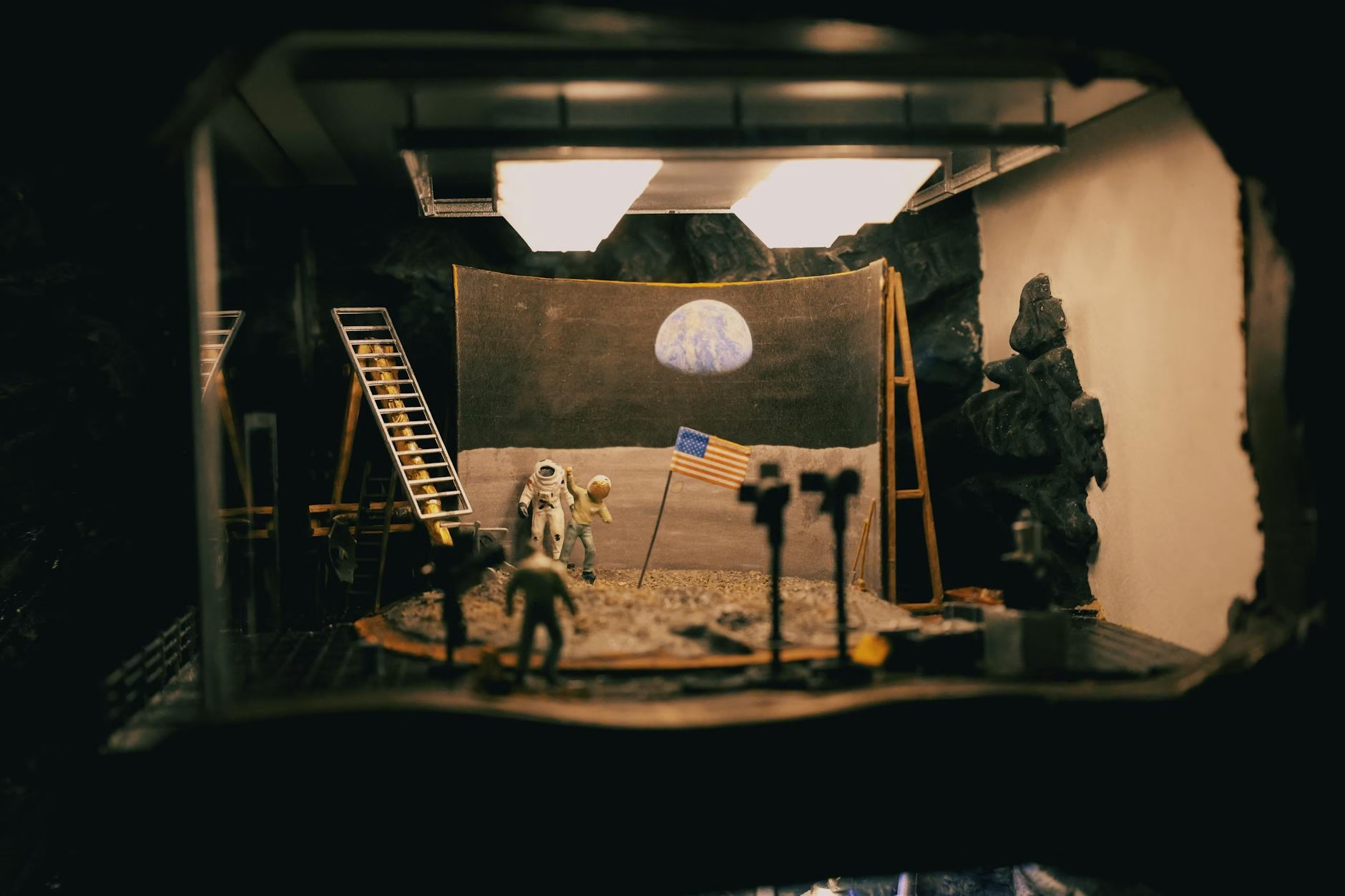
The Artemis program is not just about visiting the Moon; it’s about creating a sustainable base for long-term habitation. This involves utilizing local resources, such as water ice, to support astronauts living on the lunar surface. But the legality of these actions is under scrutiny.
International Law and Space
The Outer Space Treaty of 1967 is a key document that governs activities in space. It states that no country can claim sovereignty over celestial bodies, including the Moon. This means that while NASA can explore and utilize resources, it cannot lay claim to them in a way that violates international agreements.

As NASA pushes forwa
rd with its plans, it must navigate these legal frameworks carefully. The idea of in-situ resource utilization (ISRU) is central to the Artemis mission. However, extracting resources without clear legal guidelines could lead to conflicts with other nations interested in lunar exploration.
Key takeaways
- The Artemis program aims for long-term human presence on the Moon.
- International law restricts claims over lunar resources.
- Legal clarity is essential for sustainable lunar exploration.
- Resource utilization could lead to geopolitical tensions.
Frequently Asked Questions
- What is the Artemis II mission? It’s NASA’s upcoming mission to test systems for future lunar habitation.
- What does the Outer Space Treaty state? It prohibits countries from claiming sovereignty over celestial bodies.
- Why is resource utilization important? It supports long-term missions by reducing reliance on Earth supplies.
Sources
For the original report, see the source article.